
Drug Diversion Within a Pharmacy: Definition, Warning Signs and Response
Published September 6, 2026
What drug diversion inside a pharmacy looks like, how to tell it from a record error, the patterns worth watching, and the controls that deter it.
Drug diversion within a pharmacy can be defined as the transfer of a controlled substance out of the legitimate chain of receipt, storage, dispensing and destruction to a use nobody authorized. It can involve staff, patients, delivery drivers or outsiders. Inside the pharmacy it rarely announces itself. It usually shows up as a count that does not match the records, and most counts that do not match turn out to be record errors. The practical skill is telling the two apart quickly and fairly.
The forms it takes inside a pharmacy
- Removing tablets from an open stock bottle a few at a time, so no single count looks alarming
- Tampering: replacing tablets with look-alike product, or diluting an oral liquid
- Recording a destruction or wastage that never happened, or recording more than was destroyed
- Checking in only part of a wholesaler order and keeping the remainder
- Creating prescriptions or refills for a patient who did not request them, or for a patient who does not exist
- Short-filling a patient's prescription while recording the full quantity
- Keeping patient returns that were meant to be set aside for destruction
Record error or diversion: reading a variance
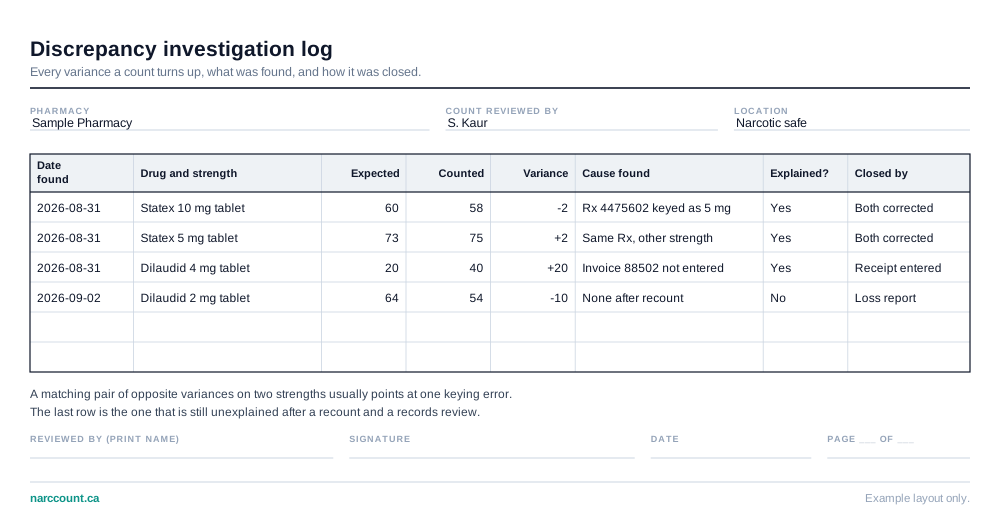
The same investigation serves both possibilities, which is why it should be routine rather than accusatory. Consider four variances from one count. Statex 10 mg is short by 2 tablets while Statex 5 mg is over by 2: a single prescription was keyed under the wrong strength, and a matching pair of opposite variances on two strengths almost always points to one keying error. Both entries are corrected. Dilaudid 4 mg is over by 20: an invoice was received but never entered, and adding the receipt closes it. Dilaudid 2 mg is short by 10, and a recount and a full review of dispenses, receipts and destructions find no cause. Only that last line is a genuine unexplained loss. Federally, a loss or theft of a controlled substance is reported to Health Canada's Office of Controlled Substances within 10 days of discovering it, and our guide to whether a narcotic discrepancy is reportable walks through that decision.
Patterns worth a closer look
A single variance says little. Patterns across several counts say much more. The ones that experienced managers watch for include:
- Repeated small shortages on the same drug, each too small to trigger concern on its own
- Shortages that cluster on one shift, one day of the week, or whenever one staff member is on duty
- Frequent wastage or destruction entries by one person, or entries with no witness recorded
- Invoices that the wholesaler shows as delivered but that were never entered in the pharmacy's records
- Entries that have been overwritten, erased or backdated rather than corrected openly
- Losses concentrated on high-demand strengths such as oxycodone and hydromorphone rather than spread across slow movers
- A staff member who volunteers for every count, every receiving shift or every destruction
- Patient complaints of short fills, or refills a patient says they never requested
Controls that make diversion harder
- Check deliveries against the invoice at the door, with a second person where staffing allows
- Count blind, so the counter does not see the expected figure first
- Have destructions witnessed by a second person and recorded on the day they happen
- Log patient returns the moment they are received, and store them apart from dispensing stock
- Rotate who counts, who receives and who witnesses, so no one person controls a whole chain
- Limit access to the narcotic safe and keys, and keep a record of who holds them
- Review manual inventory adjustments regularly, since an adjustment can hide a shortage
- Run unannounced spot counts on the highest-risk products
When a staff member may be involved
Suspicion about a colleague is where pharmacies most often make things worse by moving too fast. A calm sequence helps. Secure the records and the stock first, including any system logs, so nothing can be altered. Recount the affected drugs with a second person. Write down facts, dates and quantities rather than conclusions. Bring in the designated manager or owner before speaking to the staff member, and consider seeking employment or legal advice before any conversation about discipline. A theft is also a matter for the police, and many pharmacies contact their college for guidance when a registered professional may be involved. Keep every note with the investigation log for that count.
How NarcCount helps surface diversion early
NarcCount imports dispensing, purchase and destruction records, computes the expected on-hand figure for each drug and flags variances against the physical count, so small repeated shortages are visible across counts instead of being lost between them. Its AI triage suggests likely record causes, such as a strength or brand keyed incorrectly, so genuine unexplained losses stand out, and a loss report draft can be prepared for the pharmacist to review.
More resources
NarcCount does the reconciliation math for you and flags every variance. Get started or read the worked reconciliation example.
General information, not legal or professional advice. For authoritative requirements, refer to the Ontario College of Pharmacists and Health Canada.