
Narcotic Log Book Template: Columns, Worked Entries and Corrections
Published September 9, 2026
The columns a narcotic log book needs, a worked page of entries, what separates a good entry from a weak one, and how to correct a mistake.
A narcotic log book is the running record of one controlled substance: every quantity that came in, every quantity that went out, and the balance that should be on the shelf after each entry. A well-kept page lets anyone in the pharmacy check a physical count against the book in a few minutes. A poorly kept one turns a routine count into an afternoon of guesswork. This guide covers the layout, a worked page, the difference between strong and weak entries, and the correction habits that keep a log trustworthy.
One page for each drug, strength and form
Mixing strengths on one page hides variances, because a shortage on one strength can be cancelled out by an overage on another. Most pharmacies keep a separate page or sheet for each molecule, strength and dosage form, for example morphine sustained-release 30 mg tablets. When interchangeable brands of the same product are stocked, a common approach is to keep them on one page and write the DIN received on each receipt line, so switching brands does not split the balance across two records that never reconcile on their own.
The columns a log book needs
- Date of the transaction, not the date it was written up
- Reference: prescription number for a dispense, invoice number for a receipt, destruction record number for a destruction
- Quantity received
- Quantity dispensed
- Quantity destroyed or wasted, with the witness named in the destruction record
- Running balance after the entry
- Initials of the person making the entry
- A line for each physical count, showing the counted quantity, the variance and two sets of initials
A worked page
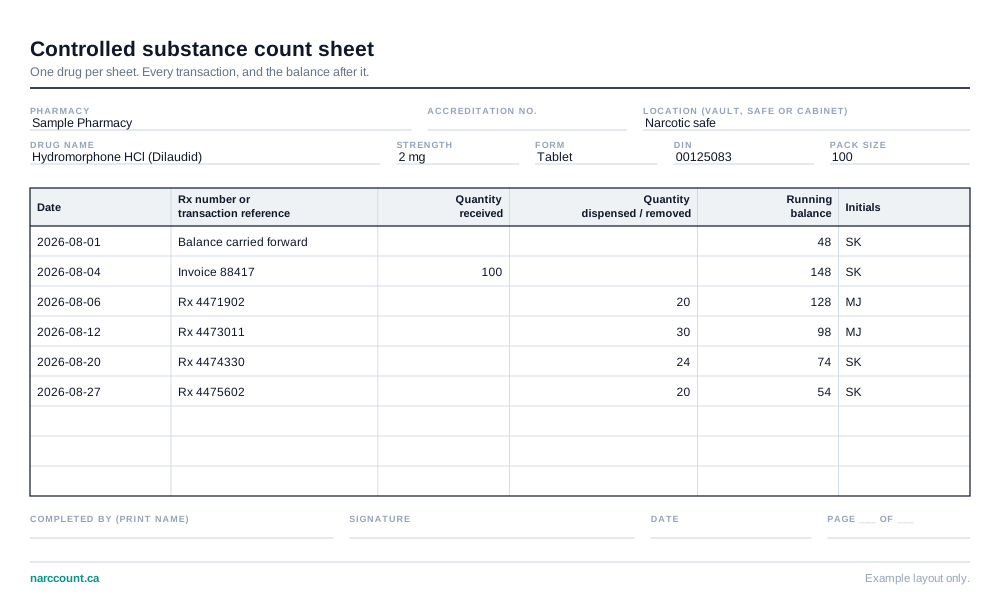
Here is how a page for hydromorphone 2 mg tablets reads, matching the example sheet below. On 1 August the page opens with a carried-forward balance of 48. On 4 August, 100 tablets arrive on invoice 88417, bringing the balance to 148. On 6 August, prescription 4471902 is dispensed for 20 tablets, leaving 128. On 12 August, prescription 4473011 is dispensed for 30, leaving 98. On 20 August, prescription 4474330 takes 24, leaving 74, and on 27 August prescription 4475602 takes 20, leaving 54. When the pharmacy next counts this drug, the shelf should hold 54 tablets, and the count line records the counted quantity, any variance and two sets of initials. Each line changes the balance by exactly the quantity in its own row, which is what makes the page checkable.
A strong entry and a weak one
A weak entry reads: 6/8, 20, MJ. It does not say whether 20 tablets came in or went out, which prescription it relates to, or what the balance became, so a variance found later cannot be traced through it. A strong entry reads: 6 August 2026, Rx 4471902, dispensed 20, balance 128, MJ. Every field an investigator needs is on the line. The difference costs a few seconds per entry and can save hours at a count.
Correcting a mistake
Mistakes in a log book are normal. What matters is that a correction leaves the original visible, so anyone reviewing the page can see what changed and why. Good practice looks like this:
- Draw a single line through the wrong figure so it stays readable
- Write the correct figure beside it or on the next line
- Initial and date the correction, and add a few words on the reason, such as wrong Rx number or keyed under the wrong strength
- Never use correction fluid, overwrite a figure, scribble it out or remove a page
- Carry the corrected balance forward from that line onward, and correct later balances the same way
- In an electronic log, add an adjusting entry with a reason instead of editing the old row
Habits that keep a paper book reliable
- Use a bound book with numbered pages, so a missing page is obvious
- Write in permanent ink and leave no blank lines between entries
- Enter each transaction on the day it happens, not in a batch at the end of the week
- Start a new page with the balance carried forward and a reference to the page it came from
- Keep the log book, invoices and destruction records together, since a count may need all three
Replacing manual arithmetic with NarcCount
NarcCount builds the same running balance from the pharmacy's imported dispensing, purchase and destruction records, so nobody has to add and subtract each line by hand. When a physical count is entered, it flags any variance and keeps a dated record of the reconciliation and the notes explaining it.
More resources
NarcCount does the reconciliation math for you and flags every variance. Get started or read the worked reconciliation example.
General information, not legal or professional advice. For authoritative requirements, refer to the Ontario College of Pharmacists and Health Canada.